
The attention economy promised marketers unprecedented reach, but consumers today are bombarded by 6,000 ads per day, yet only 0.3% are remembered. In fact, humans now have an average attention span of just 8.25 seconds, while advertising costs continue climbing despite declining returns. It is a model where human attention is treated as a scarce commodity to be captured and monetized. This approach is failing. We’ll explore what the attention economy is, why traditional tactics no longer work, and strategies that earn attention in 2026.
What Is the Attention Economy and How Did We Get Here

Image Source: No Mercy / No Malice
The original promise: free content in exchange for attention
Economist Herbert Simon identified a fundamental change taking place in our relationship with information back in 1971. He observed that “a wealth of information creates a poverty of attention and a need to allocate that attention efficiently among the overabundance of information sources that might consume it”. This insight laid the foundations for what we now call the attention economy, where human attention functions as a limited resource in an information-rich world.
The model seemed straightforward. Platforms would offer free services and users would pay with their attention. Social media companies built entire business models on this exchange. We got to connect with friends, share photos and access unlimited content without opening our wallets. Platforms got something far more valuable: our focused mental engagement, which they could package and sell to advertisers.
How platforms monetize human attention
The mechanics behind this monetization reveal a sophisticated system. Platforms don’t just sell ad space. They sell algorithmically optimized, hyper-targeted access to our cognitive resources. AI-driven algorithms analyze every interaction we make and learn what content maximizes engagement measured in time spent, clicks and shares. This data feeds back into the system and creates tailored content designed to keep us scrolling.
The financial scale is staggering. Global digital advertising revenue reached $567 billion in 2022 and is expected to exceed $700 billion by 2025. Alphabet earned $224 billion in ad revenue in 2022, while Meta generated nearly $117 billion the same year. These two companies alone capture more than half of all global digital advertising dollars.
The process works through live programmatic auctions. Platforms harvest personal data ranging from browsing patterns and social connections to location and micro-interactions like pauses, scrolls and hovers. Advertisers bid on the chance to show you an ad based on your profile. The more time you spend on a platform, the more auction opportunities it creates and the more revenue flows to the platform. Active social media users worldwide surpassed 5 billion by 2024 and are projected to reach over 6 billion by 2028.
The change from information lack to attention lack
Simon recognized that many designers framed their challenge as information lack rather than attention lack. They built systems that excelled at providing more information when what was needed were systems that filtered out irrelevant content.
Research across psychology and cognitive science confirms that humans have limited cognitive resources available at any given time. When resources are allocated to one task, the resources available for other tasks become limited. Attention operates within these constraints and is defined as focused mental engagement on a particular item of information.
A spiral of attention lack emerges from this. Attention-grabbing efforts induce attention lack, which triggers more attention-grabbing efforts. We can always create more content, so the need for attention can increase without limit. But the supply of attention is constrained by our biological givens: we cannot expand our brain capacity. Competition for attention in present-day media markets has become fierce. Platforms use behavioral psychology, infinite scroll mechanisms and algorithmic personalization to compete for every spare moment of user attention.
Why the Traditional Attention Economy Model Is Failing Marketers
Image Source: QuickFrame – MNTN
Rising advertising costs with declining returns
Marketers face a paradox: advertising costs continue climbing while returns diminish. TikTok’s US ad CPMs rose 15.6% in Q1 2025, while Snapchat experienced the fastest growth at 27.6% year-over-year. Display retargeting CPMs surged 18% in early 2025 compared to the previous year. Google’s Q1 2025 CPMs averaged $17.60. This represents a 22.3% jump since 2021.
These increases arrive coupled with troubling ROI pressure. Social media’s share of total ad spend dropped from 18% to 17% in 2025. TikTok investment declined by 8 percentage points after heavy growth. A point often overlooked: 22% of marketers struggle to measure social ROI, and 26% report that leadership doesn’t review analytics. Marketing credibility erodes when 36% of CFOs cite the use of vanity metrics by CMOs as a top concern.
Ad fatigue and avoidance among younger audiences
Repetition breeds rejection. A study by AD-ID and The Harris Poll found that 61% of people are less likely to buy from a brand when they see the same ad repeatedly. Almost half have already avoided a purchase because of ad fatigue. Research by Simulmedia shows people who saw an ad 6-10 times were 4.1% less likely to buy than those who saw it 2-5 times. Almost 50% of social media users have reduced their time on certain platforms because the ad load feels too heavy.
Gen Z presents the steepest challenge. This generation avoids ads at a 69% rate, as opposed to a global figure of 50%. A striking 82% skip ads as fast as possible, and 51% use technology to block ads. They skip ads three seconds earlier than Gen X. Nearly 1 in 3 people use ad blockers, though this represents a relative 15% decline from 2021’s 37%.
The fragmentation problem: audiences scattered across platforms
Audiences aren’t concentrated in predictable spaces anymore. Nielsen’s Gage report from May 2025 shows traditional broadcast and cable programming accounts for 44.2% of time spent with television sets in the US. Streaming services nearly match this at 44.8%. Thailand shows 87% still watch traditional TV, but this exists alongside 91% being online and 89% engaging with social media. Music streaming services now attract 56% of listeners, while traditional radio accounts for 12%.
This dispersion forces marketers to direct themselves through a highly fragmented environment where reaching target audiences requires strategies that are sophisticated.
Engagement metrics that don’t translate to business results
High engagement without strategy means busy dashboards and stagnant sales. Engagement shows attention, but results show effect. Vanity metrics provide numbers that look impressive but have little correlation with business health. Traffic can spike 40% while churn accelerates. A company with 500,000 Instagram followers and no attributable revenue is worse off than one with 5,000 followers generating 15% of pipeline from social content. Pageviews don’t pay bills. Customers do.
The Real Problem: Quality of Attention Matters More Than Quantity
Counting eyeballs tells us nothing about what those eyes actually processed. Research by Lumen reveals that only 30% of viewable digital ads are actually looked at, meaning 70% of ad spend goes to impressions that render but capture no real attention. This gap between exposure and engagement defines why the attention economy is failing marketers.
Why impressions and reach no longer guarantee effect
Traditional advertising metrics like impressions, clicks, and click-through rates mainly show how often an ad gets seen or clicked on. These vanity metrics might give an idea of user interest, but they don’t tell us much about the quality of those interactions. High impressions or clicks can be misleading and make it seem like the ad is performing well when users might just be clicking out of curiosity or by accident.
Viewability measures whether an ad had the chance to be seen, but attention metrics go further by assessing whether a consumer actually noticed and absorbed the message. Research shows a campaign seen by millions is meaningless if it doesn’t actually change behavior, perception, or drive action. One message that strikes a chord with the right 1,000 people is worth more than a million impressions that fade into the scroll.
The difference between passive exposure and active engagement
Attention operates on two distinct levels that matter for advertising success. Gaining attention refers to the original capture of visual focus and determines whether an advertisement attracts a consumer’s gaze in a competitive visual environment. Holding attention refers to the sustained engagement with an advertisement and ensures that its message is processed beyond the first exposure.
Passive behaviors are characterized by minimal, positive, and largely inactive consumption of content. Users inertly interact with content on social media without contributing or creating their own. Active engagement behaviors go beyond passive consumption and necessitate moderate to high levels of interaction with digital content, such as creation and contribution.
Measuring attention depth instead of attention span
Attention measurement is an advertising analytics approach that goes beyond viewability to assess whether consumers actually focused on an ad and how much cognitive effect it had. Key attention metrics include attention seconds, average attention time, active page dwell time, and attentive cost per mile. Research shows that attentive impressions are stronger predictors of outcomes like brand recall and purchase intent than viewable impressions alone.
High-attention ads drive a 130% lift in conversions and reduce cost per action by 51%. Measurement and optimization using attention metrics have helped advertisers see an average of 31% upper-funnel and 56% lower-funnel lift.
What Actually Works: Strategies That Earn Attention in 2026

Image Source: Vertical Response
Strategies that work in the attention economy don’t extract attention; they earn it through value. Here’s what actually moves the needle.
Create value-driven content that reduces cognitive load
Human brains have limited processing power. Performance suffers when information exceeds our knowing how to handle it. The mental resources required to operate a system are what we call cognitive load. We should minimize extraneous cognitive load. Short sentences work best (3-4 lines maximum). Clear subheadings help. Sans serif 14-16px fonts are easier to read, and familiar language beats jargon. Email performs best when campaigns combine attractive offers with unique, interesting content. Education and authenticity motivate customers. They want to understand the “why” behind their purchase.
Integrate authentically into existing user experiences
Native advertising lines up marketing content with context. It provides helpful material in environments where users already spend time. This approach doesn’t rely on invasive tracking and respects user experience instead. Native ads should feel at home on the platform where they appear. They should follow each publisher’s tone and formatting guidelines. Native advertising is projected to be worth over $400 billion by 2025.
Use contextual relevance instead of interruption
Permission marketing costs less than interruption marketing. Campaigns are targeted and measurable. Inbound marketing guides are 61% less costly than interruption marketing guides. The average cost per guide drops approximately 80% after 5 months during consistent inbound marketing efforts. Users are already tapped into the topic with contextual alignment and more likely to pay attention.
Build trust through transparency and authenticity
71% of consumers are more likely to buy from brands they believe are transparent and responsible in their data use. 92% of consumers believe businesses must do more to protect their privacy. 61% have abandoned an organization because of its data practices. Over 90% of consumers say transparency by a brand is important to their purchase decisions. 94% of consumers are more likely to be loyal to a brand when it commits to full transparency.
Use interactive and participatory formats
Interactive content sees 52.6% higher engagement than static content. 81% of marketers agree that interactive content is a low-cost, high-impact strategy that attracts buyers. Interactive content can generate 2x more conversions and 4-5x more pageviews than passive content. 69% of consumers trust the recommendations creators give.
Measure meaningful attention metrics over vanity metrics
Attention metrics like in-view time, active attention time, and engagement tracking provide deeper insights than impressions. Multiple data signals combined offer a more complete measurement than individual signals. High-attention ads drive a 130% lift in conversions and reduce cost per action by 51%. Focus on conversion rates, click-through rates, and customer retention instead of pageviews and follower counts.
The Future of Marketing: From Attention Extraction to Attention Restoration
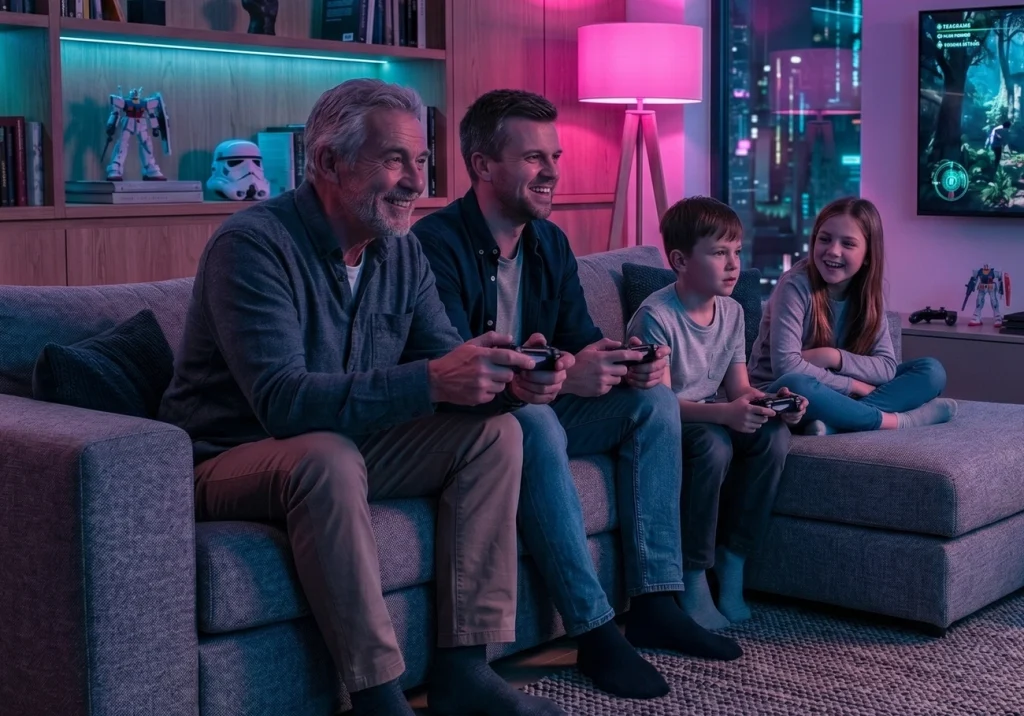
Image Source: inStreamly
Moving forward requires rethinking the relationship between brands and human attention. Marketers need strategies that restore cognitive resources while building genuine connections instead of extracting attention through interruption.
Gaming and immersive environments as high-attention channels
Gaming delivers what traditional channels struggle to provide: sustained, voluntary participation. Video games were downloaded 52 billion times around the world during 2025, and 50 billion of those downloads happened on mobile devices. Players don’t passively consume content. They participate, build communities and invest time into skill development. Immersive marketing through AR and VR creates emotional connections by stimulating multiple senses at once. These environments blur boundaries between physical and digital worlds. Brands get opportunities to create memorable experiences that strike a chord long after interaction.
Community-led and creator-driven marketing approaches
More than 76% of internet users participate in online communities. Customers are 84% more likely to trust a brand when friends or family recommend it. Community-based marketing delivers measurable results: 49% of brands using community forums achieved 25% cost savings. The creator economy was valued at $250 billion in 2023 and is projected to reach $480 billion by 2027. About 65% of Gen Z identify as video content creators. Brands that collaborate with creators access authentic voices and niche audiences that are already engaged.
Offline and experiential touchpoints that cut through digital noise
Physical interactions cut through the digital clutter. Customers who participate with brands both online and offline are 23% more likely to repeat purchases. Experiential marketing creates emotional connections through multi-sensory events, and 34% of consumers share their brand experiences on social media. About 97% of Gen Z shop in brick-and-mortar stores, and 28% prefer to see, touch and try products.
Conclusion
The traditional attention economy model is broken. Chasing impressions will only drain your budget faster. Quality attention drives 130% higher conversions than passive exposure alone.
Success in 2026 requires a fundamental change. We need to create genuine value that earns sustained participation instead of interrupting audiences. Interactive content and authentic creator partnerships matter. Build meaningful metrics that tie directly to revenue.
The brands that win won’t be those capturing the most attention. They’ll be the ones worth paying attention to. Start measuring what matters and build experiences people actually want.